Language and Buddhism, part 2
I mentioned in my first article on Language and Buddhism that looking at my English-based understanding of Buddhist concepts has been helpful to my practice. This article is a brief foray into Emptiness.
Emptiness in English
I’ve only had to wrestle with the word “emptiness” since I switched to Zen Buddhism a couple years ago. The Heart Sutra is a major Mahanaya Buddhist scripture, and an abbreviated version is one of the foundational scriptures of modern Zen. A key concept in the sutra is usually translated as “Form is no other than emptiness, emptiness is no other than form.” Emptiness is a literal translation of the Sanskrit word śūnyatā (P: suñña). Śūnyā means void, zero, or empty and -tā is a suffix that parallels the English -ness so śūnyatā is reasonably translated as emptiness. The problem with the literal translation is that in English emptiness is usually construed to mean absence and has as a largely negative connotation. I ate all the cookies; now the box is empty. The half-empty glass is a metaphor for pessimism. Unfortunately, that meaning leads many non-Buddhists and beginners to take Buddhism as a form of nihilism. That couldn’t be further from the truth.
Emptiness in Buddhism
A lot of great teachers sidestep the problem with emptiness, offering different concepts or translations that convey a more neutral or even a positive framing. My first foray into Buddhism was in a small, student-led mediation group that borrowed heavily from Tibetan Buddhism. I read some of the 14th Dalai Lama’s books early on and he speaks of enlightened mind as being filled with the clear light of the open sky. Robert Thurman speaks of bliss and the pure joy of reality. (As an aside, I think the relentless equanimity of Zen does Buddhism a disservice.) Joan Halifax Roshi’s translation of the Heart Sutra substitutes “boundlessness” for emptiness.
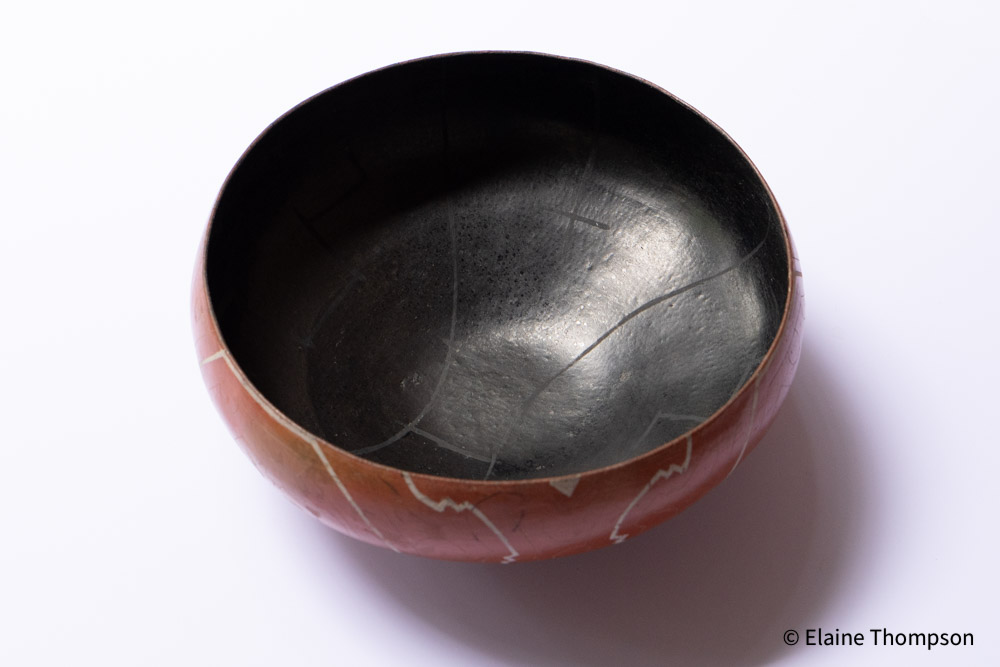
Loch Kelly claims the root of śūnyatā, śūn, refers to the generative potential of a seed. The sentiment was so attractive I spent some time looking into it but he’s dead wrong. However, as with a lot of Sanskrit and Pali words, śūnyatā did have different connotation in Hinduism. Hindus use the phrase Śūnyā Brahman as supreme nothingness. Brahman is the creative principle that manifests the world from śūnyatā, which is continually created anew by Shiva. All things originate from śūnyatā, making it a state of infinite possibility. Śūnyatā doesn’t carry the pessimistic American half-empty glass connotation. It’s the blank canvas of creation, or the space in a bowl that is ready to be filled. I have a different understanding of the “wash your bowl” koan now, which was partly informed by a podcast I can’t find now. If your mental bowl is full of ideas and experiences, nothing new can be created.
The Etymology of Sunyata
I looked into the etymology out of curiosity. I’m not sure where Kelly’s assertion came from but I can’t find solid support for it. Wikipedia had an unreferenced note that śū is the root of śūnyá but when I tried to look up a source everything just circled back to Wikipedia. (Sigh.) I finally what I think is the original source on S.R. Hardy’s blog. Weirdly, it vanished between drafting this article and double-checking links to publish, so this is a Wayback link. Hardy claims that śū (शू) and the closely related śvi (श्वि) derive from the Proto Indo-European (PIE) root *svi– meaning “hollow”, and that śū is the root of śūnyatā (शून्यता). Śū and śvi are both Sanskrit roots for words that mean swell, so Hardy asserts that growth and emptiness are linguistically related. Unfortunately, I haven’t been able to find anything in the broader PIE work to substantiate his claim. The śū consonant connection makes for a neat story but I think Hardy fit the data to his philosophy.
Digging into Sanskrit roots doesn’t offer much in the way of growth either. First, śūna (शून) is used in the anatomic sense of bloating or inflammation and can mean gout. There isn’t a connection to empty or void. Śvi has more of a sense of growth and śiśu (शिशु) means baby or child, but the spelling and pronunciation aren’t the same. Second, I found a major PIE reference by Mallory and Adams1 and they place *keuhx– (“hollow”) as the PIE root of śūnyá (शून्य). They don’t have *svi- listed as a root word at all. The root *su- broadly means good, so it seems unrelated. Finally, the mathematical meaning of zero was added to śūnyá around 600 AD, making it clear that by that point the word definitely meant void in common usage.
An alternative linkage could be sūna (सून), which means blossom or bud in Sanskrit and loosely relates the concept of growth. However, the spelling of śūnyá (शून्य) derives from śū (शू) rather than sū (सू) so I don’t think that connects emptiness and seeds either. I’ve discarded the notion and I ended up editing Wikipedia to remove the claim that śū is the root of śūnyatā since it was unreferenced, poorly substantiated, and bouncing around the Internet.
1The Oxford Introduction to Proto-Indo-European and the Proto-Indo-European World, J. P. Mallory and D. Q. Adams, 2006.
Finis
If you’ve grappled with the connotations of emptiness the way I have, I hope some of this meandering helps your practice.
Comments are closed.